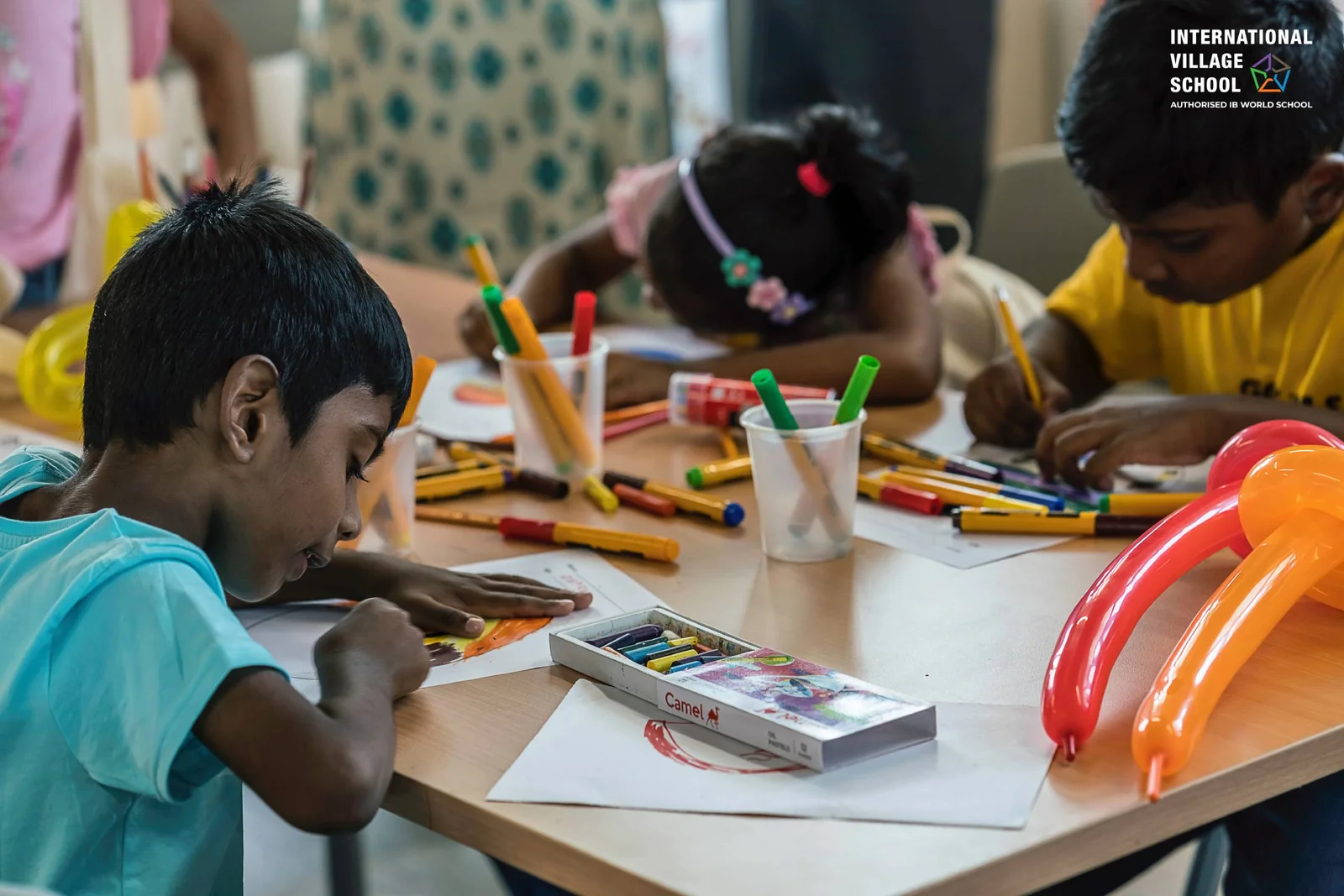
In most primary schools, a topic is introduced, notes are taken, and the child is tested on how accurately they can reproduce what was taught. The IB PYP curriculum starts from a different premise. Rather than asking children to memorise and repeat, it asks them to investigate, question, and construct their own understanding.
Learning is organised around six transdisciplinary themes that connect subjects to real-world ideas — so a child studying "Sharing the Planet" is not reading about environmental responsibility in a textbook. They are inquiring into it across science, language, and social studies simultaneously. Knowledge is not handed to the child. It is built by them.

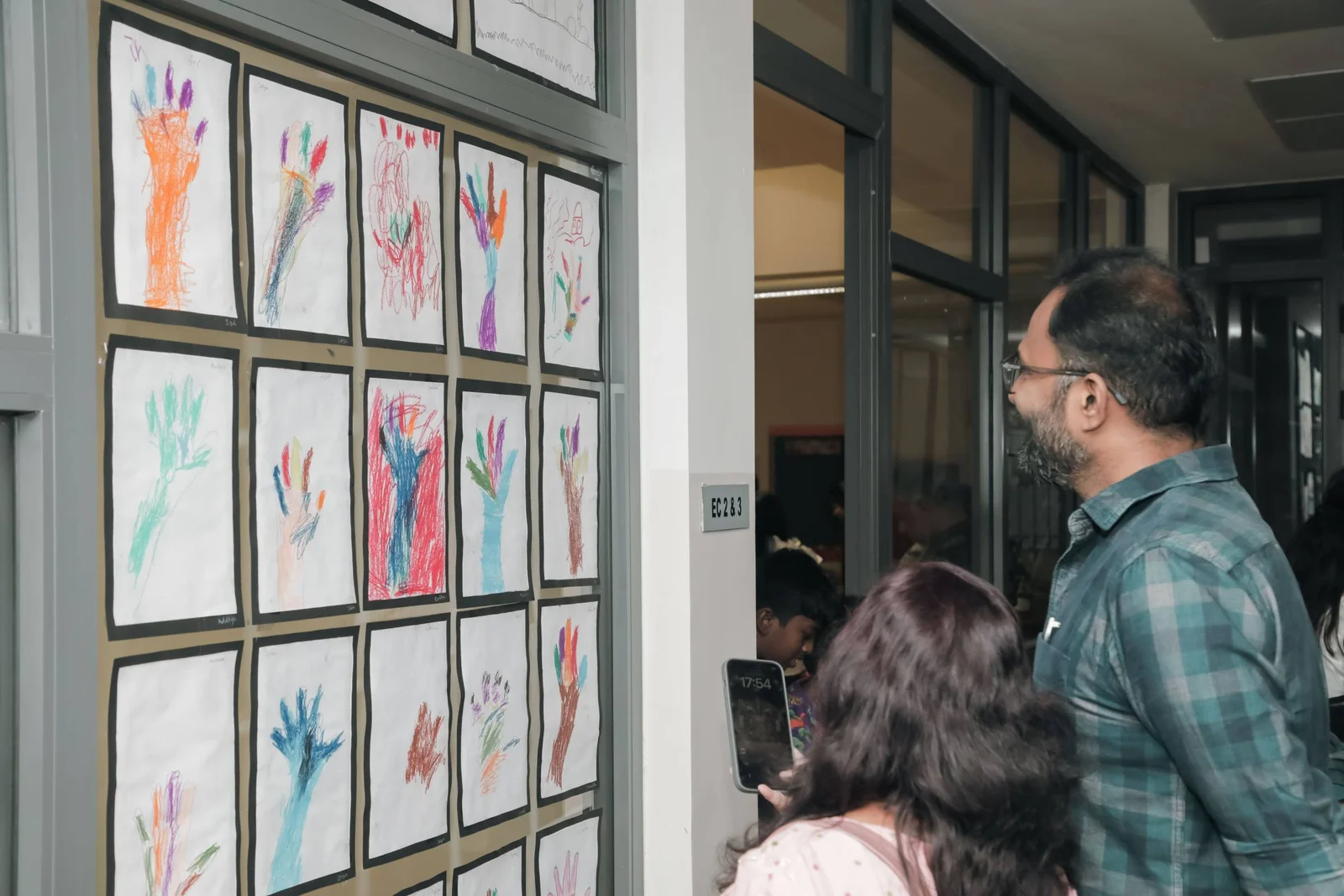
In the final year of the Primary Years Programme, students complete the PYP Exhibition — a student-led inquiry project that marks the culmination of their PYP experience.
Each student selects a real-world issue of personal significance, investigates it independently over several weeks, and presents both the process and the outcome to the school community. The topic, the questions, and the approach are entirely the student's own.
Most students describe the Exhibition as the point at which learning stops feeling like something done to them and starts feeling like something they do. That shift in ownership is exactly what the PYP is designed to produce — and what prepares them for the step into the Middle Years Programme.
The UK Cambridge pathway leads to the IGCSE at Grade 10, with student performance measured through subject-specific written examinations. Progress through the Cambridge primary and lower secondary stages is tracked against defined learning objectives within each subject.
The PYP measures progress differently. There are no written board examinations until the Diploma Programme level. Instead, teachers assess students continuously against four criteria within each subject area, and the programme culminates in the PYP Exhibition — a student-led inquiry project that serves as the clearest measure of what a child has genuinely understood and can independently do. A detailed comparison of UK Cambridge, ICSE, CBSE, and the IB framework is available on our curriculum comparison page.


