Follow us: 
Logo of International Village School.
Menu

IB Diploma Programme (DP)

International Village School is in candidacy for the IB Diploma Programme.*
Where two years of independent research prepare students for the demands of university.

At International Village School, the IB Diploma Programme continues the pathway that begins in the PYP and MYP, and it welcomes students from other boards. Students in Grades 11 and 12 (ages 16 to 19) study six subjects and write an independent research paper on a topic of their choice.
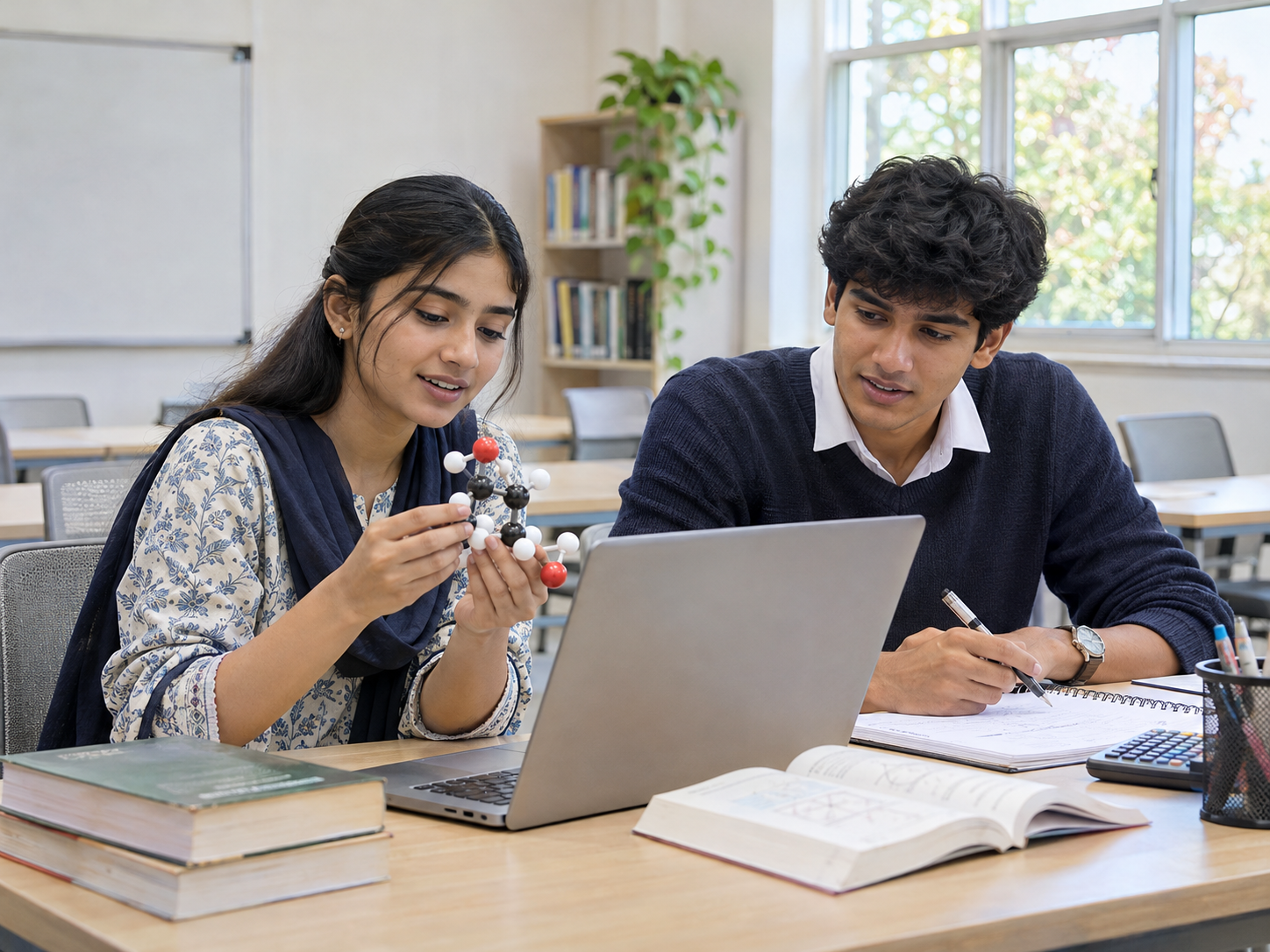
AI-generated scene of senior students exploring science with a molecular model and laptop.

What Your Child Learns

The IB Diploma Programme runs for two years, in Grades 11 and 12. Each student studies six subjects from different fields and completes the DP core, which has three parts. A student who loves science still writes essays, and a student who loves literature still studies mathematics.

The Six Subject Groups

Decorative underline.
Students choose one subject from each of the first five groups and take the sixth from The Arts or from a second subject in another group. Every student takes three or four subjects at Higher Level, with about 240 teaching hours each, and the rest at Standard Level, with about 150 hours each. Higher Level courses go deeper into the content. Each group offers courses at both levels, so students build a combination that fits their strengths and their university plans. These six choices make up the student’s IB Diploma subjects.
Studies in Language and Literature
Students read literature and other texts closely and write analytically in the language they know best. Students can take Language A: Literature or Language A: Language and Literature.
Language Acquisition
Students learn an additional language. Language B suits students who have studied the language before. Language ab initio starts from the beginning and runs at Standard Level.
Individuals and Societies
Courses such as history and economics examine how societies work and change. Geography and psychology also belong to this group.
Sciences
Students run laboratory investigations, including an experiment they design themselves. Biology, chemistry, and physics all fall into this group.
Mathematics
Students choose between two routes. Analysis and Approaches focuses on algebra and calculus, and Applications and Interpretation focuses on statistics and modelling.
The Arts
Students create work in an art form and study the work of other artists. Visual arts and music are among the options. A second subject from another group can replace this choice.
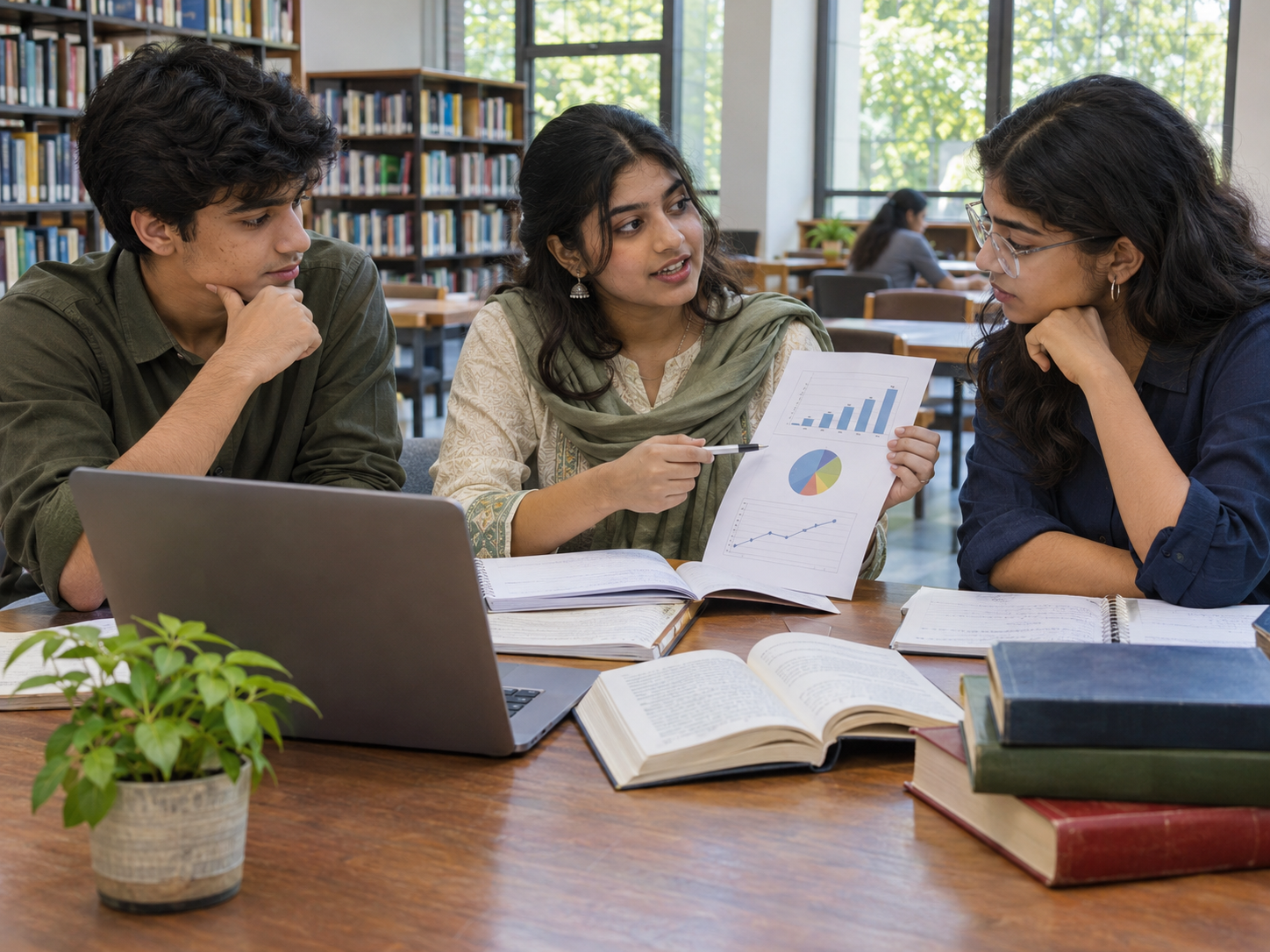
AI-generated scene of senior students discussing independent research in a library.

The DP Core

Three core requirements run alongside the six subjects, and no student earns the diploma without completing all three.
Theory of Knowledge: This course asks how we decide what is true. Students examine the evidence behind what they learn in every other subject and compare how different fields judge a claim. The course takes about 100 teaching hours. In the exhibition, students choose three objects and explain how each one connects to a question about knowledge. A 1,600-word essay on one of six titles that the IB publishes completes the course.
Extended Essay: Each student chooses a topic in a subject they study and writes an independent research paper of up to 4,000 words, with a supervisor guiding the work. Students frame their own research questions and defend their conclusions with evidence. External IB examiners mark it. The work takes about 40 hours and closes with a short reflective interview with the supervisor. The paper extends the MYP Personal Project and builds the research habits that university courses expect.
Creativity, Activity, Service (CAS): CAS takes learning outside the classroom and runs for at least 18 months. Students plan experiences across the three areas in its title and keep a reflective record of what each one teaches them. A CAS project lasting at least one month carries an idea into action. CAS carries no grade, and every student must complete it.

Who Can Apply

The Diploma Programme begins in Grade 11 and accepts applications from International Village School students and from students at other schools. Applicants from any recognised board, Indian or international, qualify, and the programme does not require prior IB experience. The school looks for Grade 10 results that reach its entry standard, with particular attention to English and to the subjects the student wants to take at Higher Level.

The admissions team can confirm the current entry standard upon request.
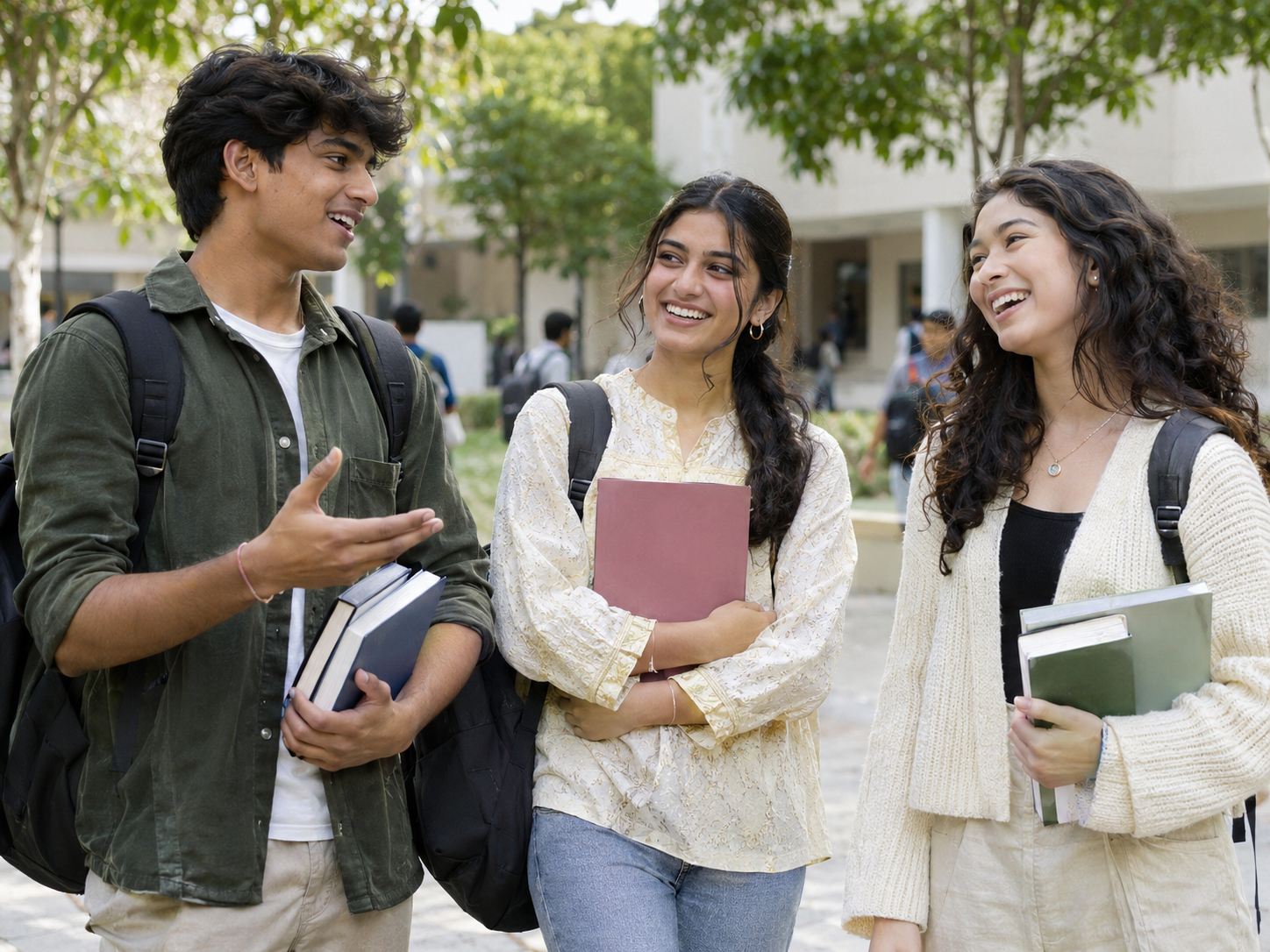
AI-generated scene of senior students carrying books and chatting in a courtyard.

Frequently Asked Questions

Decorative underline.
International Village School is in candidacy for the IB Diploma Programme,* seeking authorisation from the IB to offer it in Grades 11 and 12. The IB has authorised International Village School for the PYP and the MYP. The admissions team shares the current stage of authorisation with parents on enquiry.
Each subject earns a grade from 1 to 7, with 7 as the highest. Theory of Knowledge and the Extended Essay each earn a grade from A to E, and together they add up to 3 bonus points, so the maximum total is 45. A student earns the diploma by scoring at least 24 points and finishing all three core requirements.

The IB also sets minimum conditions on individual grades. Written examinations take place in May of Grade 12 and carry the larger share of the grade in most subjects. Internal assessment, such as laboratory reports and oral presentations, makes up the rest. Teachers mark it, and the IB moderates it externally.
Yes. The Association of Indian Universities (AIU) has recognised the IB Diploma since 1983. It grants equivalence to students who earn at least 24 points with passes in three Higher Level and three Standard Level subjects.

Some institutions require an AIU equivalence certificate, which students can request through the AIU. Several Indian universities also accept predicted grades for provisional admission.

Medicine and engineering courses set their own subject requirements and entrance tests, including NEET and JEE, so families should check the required subject combination before the student chooses subjects. Medicine in India requires all three sciences, so a student who aims for it plans the science combination from the start.

Universities across the world also recognise the IB Diploma as an entry qualification.
Indian board programmes usually group studies into streams and culminate in board examinations. The DP requires every student to study six subjects across different fields and to complete the core alongside them; the IB assesses both examinations and coursework. A detailed comparison is available on our IB vs IGCSE (UK Cambridge), ICSE & CBSE page.

Some Things Are Better Seen Than Read

Decorative underline.
Tours run throughout the year, led by students and International Village School faculty. Seats per session are limited. Book yours early.
The brand logo of International Village School.
Map Icon.
chevron-down